

Wang Church in Karpacz – a remarkable Norwegian church in the heart of the Karkonosze Mountains
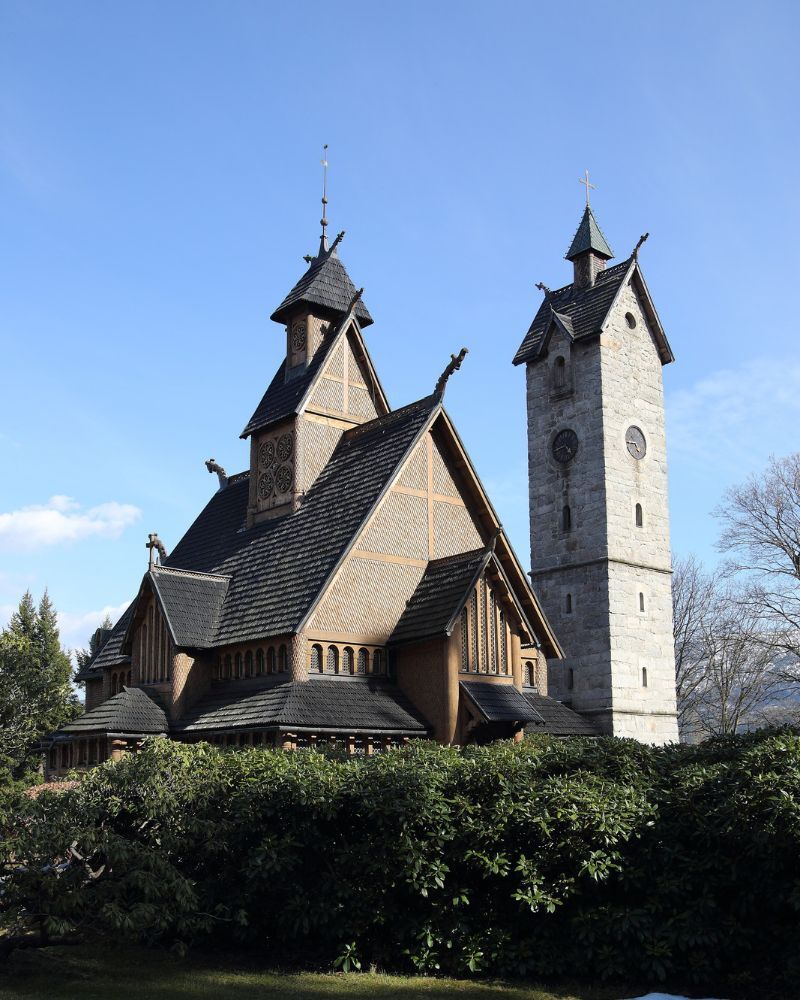
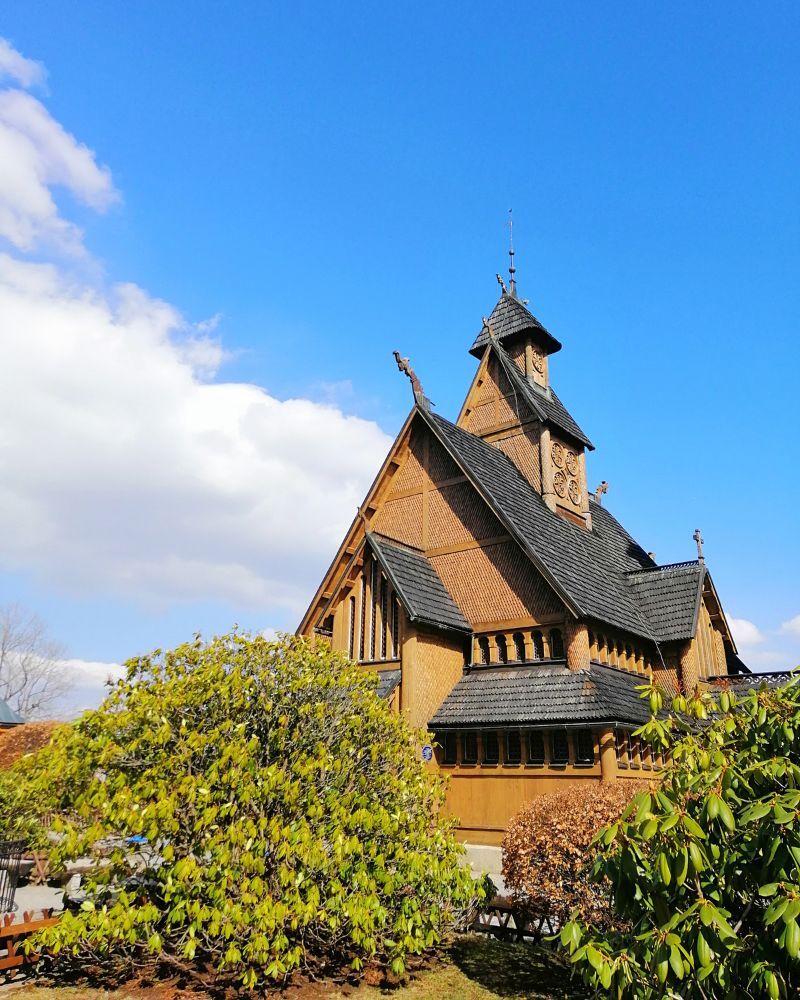
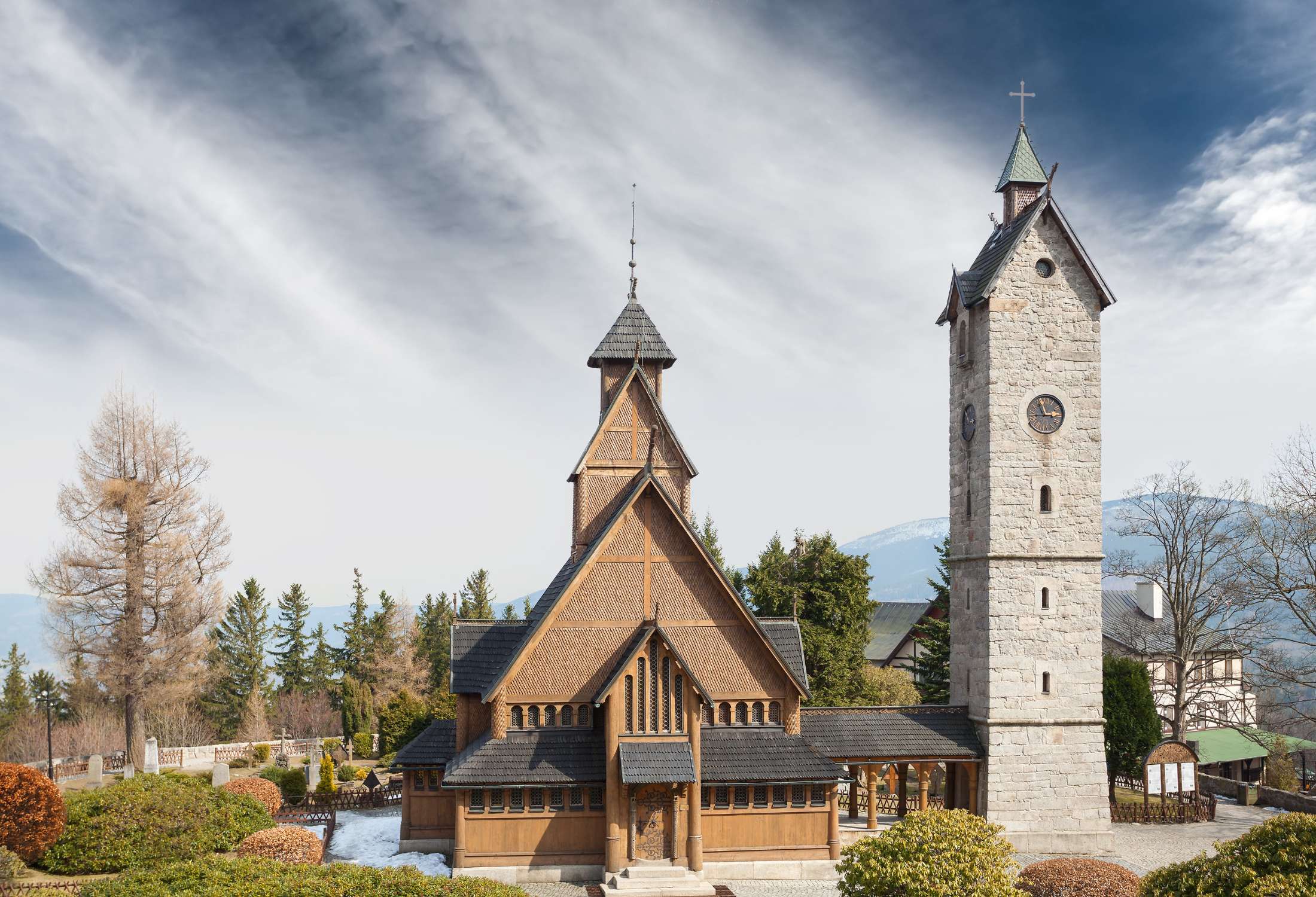
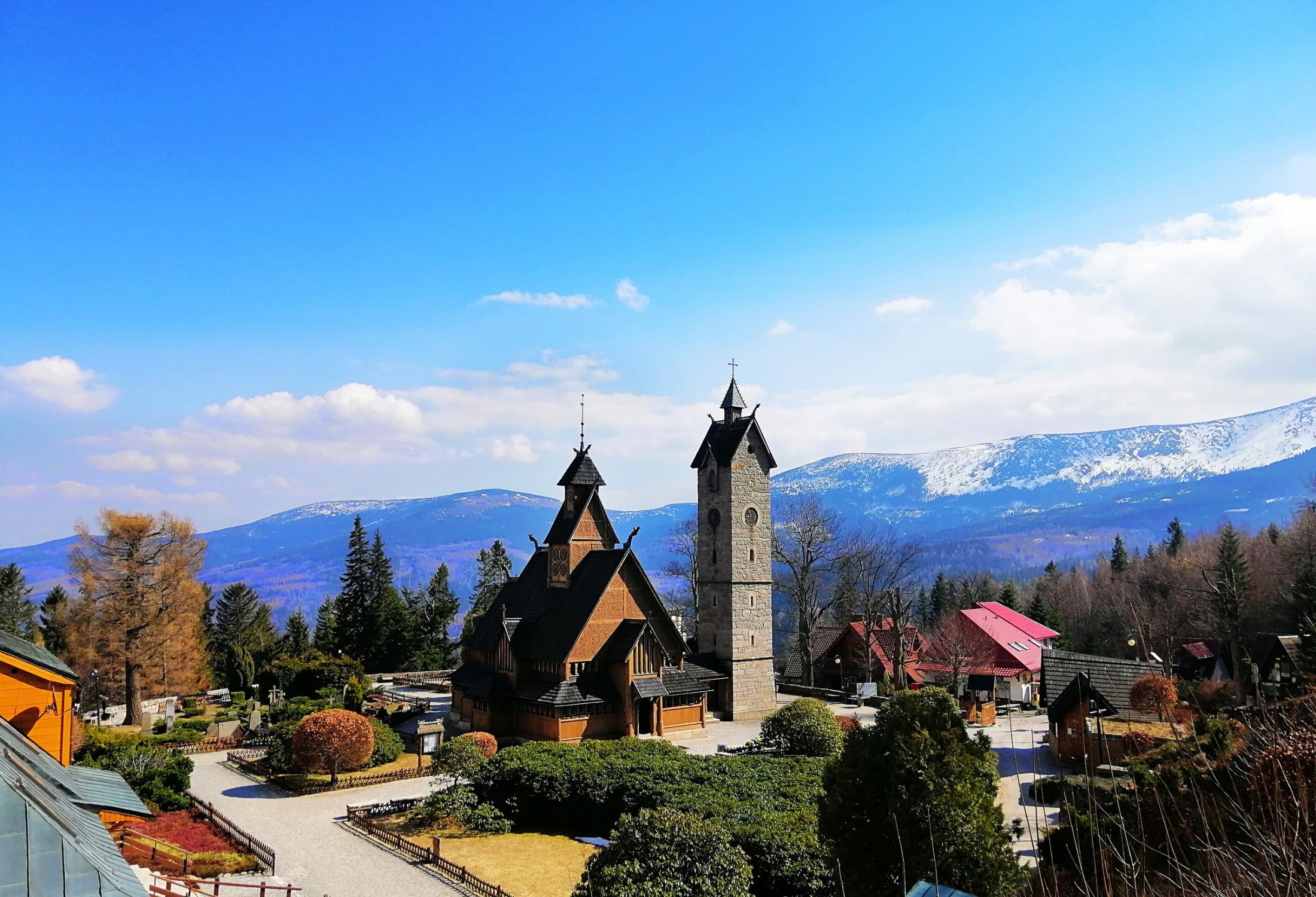
Wang Church in Karpacz is one of Lower Silesia’s most remarkable landmarks and a true gem of Scandinavian religious architecture. Built of wood in Norway at the turn of the 12th and 13th centuries, it was moved to the Karkonosze Mountains in the 19th century. Its pinewood structure uses traditional carpentry joints without metal nails. The church delights visitors with intricate carvings, Nordic dragon motifs, runic inscriptions and a unique atmosphere. Located at around 885 m above sea level, surrounded by mountains and forests, it is both a valuable historic monument and one of Karpacz’s best-known symbols.
Distance from Pakoszów Palace and travel time
Driving distance: approx. 23–27 km
Travel time: approx. 35–45 min
Total visit: approx. 1–1.5 hrs
Distance and travel time are approximate and depend on the route, traffic and road conditions.
Wang Church is an excellent destination for a short trip during your stay at Pakoszów Palace. Visiting the church can be combined with a walk around Karpacz or a longer hike on the Karkonosze trails.
How to get there and where to park?
Wang Church is in the upper part of Karpacz, at 8 Na Śnieżkę Street.
From Pakoszów Palace, drive towards Jelenia Góra, then via the Mysłakowice and Miłków area to Karpacz. In Karpacz, follow the main road towards Karpacz Górny and the brown tourist signs for Wang Church. Paid car parks are located near the church on Karkonoska Street and at 1 Spokojna Street, around 500–800 m away. The walk from the car park takes about 10–15 minutes. Note that the final section is uphill. An alternative is the forest path Via Sacra. In winter and during rainfall, some sections may be slippery. Private cars must not drive directly to the church, except for vehicles belonging to authorised persons. Address: 8 Na Śnieżkę Street, 58-540 Karpacz.
How much time should you allow to visit Wang Church?
Allow around 20–30 minutes to visit the church interior. To take in the architectural details, historic courtyard, stone bell tower and surroundings, plan around 45–60 minutes. Including the walk from the car park and back, the whole visit usually takes around 1–1.5 hours. Photography and architecture enthusiasts may wish to stay longer.
Ticket prices and visiting hours
Prices according to the church’s official website, checked in November 2026.
- Standard ticket – adults PLN 16
- Children 6+ PLN 9
- Pupils and students up to age 26 PLN 9
- Church grounds only PLN 2
- Photography or filming fee PLN 5
Visiting hours:
- 15 April to 31 October: 9:00–18:00
- 1 November to 14 April: 9:00–17:00
- On Sundays and most public holidays, visits are possible after the service, usually from 11:30.
Tickets can be bought at the on-site ticket office with cash or card. The church remains an active Evangelical-Augsburg church, so visiting hours may change due to services and religious ceremonies.
Wang Church – the history of a church brought to the Karkonosze Mountains from Norway
The church’s beginnings in medieval Norway
The history of Wang Church dates back to the turn of the 12th and 13th centuries. It was built in the small village of Vang in southern Norway, by Lake Vangsmjøsa and surrounded by picturesque mountains. The church takes its name from this Norwegian village.
The building represents the stavkirke, or wooden stave church, a type characteristic of medieval Scandinavia. Such churches were built in Norway as Christianity gradually spread, combining new religious symbolism with building traditions and ornamentation rooted in Nordic culture.
Wang Church was built from exceptionally durable pinewood, whose natural resin content improved its resistance to harsh weather. The structure rests on wooden posts and beams joined with precisely crafted carpentry joints. The result was a building that survived for centuries and one of Europe’s most remarkable architectural relocations.
Why was the church sold and taken out of Norway?
In the 19th century, the medieval church no longer met the needs of Vang’s growing community. The building was too small, and its condition required costly repairs. Residents decided to build a new church and sell the old one, using the proceeds to cover part of the costs.
The wooden building attracted the interest of Norwegian painter and professor at the Academy of Fine Arts in Dresden, Johan Christian Dahl. As an admirer of Norway’s heritage, he recognised the church’s exceptional historic value and became involved in saving it.
The monument eventually came into the hands of King Frederick William IV of Prussia. It was initially planned to rebuild the church near Berlin, on Peacock Island. Before a new location was found, however, the wooden structure was carefully dismantled, documented and secured for transport.
In 1841, the church components were packed into crates and transported by ship to Szczecin, then to Berlin. Thus the medieval church began a journey that would end hundreds of kilometres from its original location.
Countess Friederike von Reden – the woman who brought Wang to Karpacz
One of the most important figures in the history of Wang Church was Countess Friederike von Reden, who was associated with nearby Bukowiec in the Jelenia Góra Valley. This aristocrat, known for her social, religious and cultural work, saw an opportunity to use the historic church for the people of the Karkonosze region.
In what was then Karpacz Górny, called Brückenberg, the local Protestant community lacked a suitable church. The countess persuaded King Frederick William IV to abandon his Berlin plans and give the Norwegian church to the residents of the mountain town.
Count Christian Leopold von Schaffgotsch of Cieplice donated a site for its reconstruction on the slope of Czarna Góra. The location was chosen at around 885 m above sea level, amid Karkonosze forests and near trails leading towards Śnieżka.
Thanks to Countess von Reden’s commitment, the medieval monument did not become merely a museum exhibit but regained its original purpose as a place of worship and community gatherings.
Rebuilding Wang Church in Karpacz, 1842–1844
In spring 1842, the wooden church components reached the Karkonosze Mountains. Rebuilding it was a major challenge: some original pieces had been damaged, while others needed repair or reconstruction.
On 2 August 1842, King Frederick William IV personally attended the ceremony of laying the foundation stone for the rebuilt church.
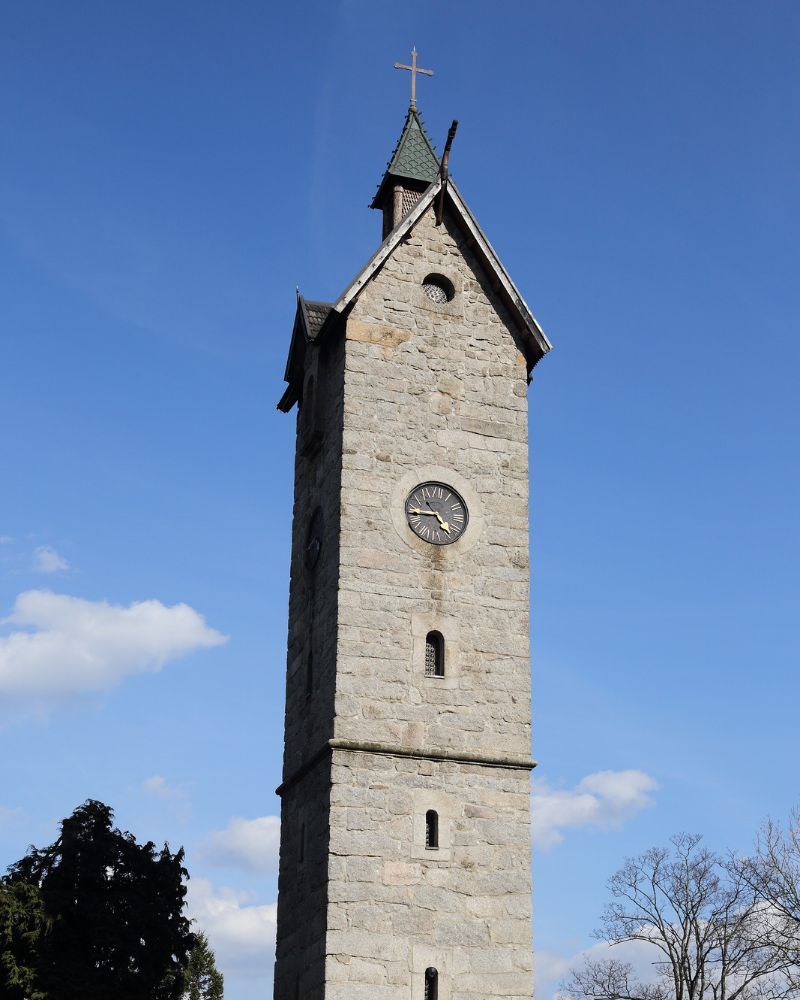
Many medieval elements of the Norwegian structure were preserved, while changes and additions were made to meet the needs of the new parish. A distinctive stone bell tower of Silesian granite was also built. Its purpose was not only religious; it also shielded the wooden church from strong winds blowing from Śnieżka.
On 28 July 1844, Wang Church was officially opened and consecrated. The King of Prussia and his wife attended, along with numerous representatives of the aristocracy and clergy.
Since then, the church has continuously served the local Protestant community while remaining one of the Karkonosze Mountains’ most valuable historic monuments.
Wang Church architecture – a remarkable blend of Viking art and Christianity
A wooden structure without metal nails
One of Wang Church’s most distinctive features is its construction. Medieval builders used traditional carpentry techniques, joining the individual elements with precisely shaped wooden joints instead of metal nails.
Sturdy posts, beams and richly decorated portals testify to the skill of craftsmen from almost 900 years ago. The distinctive steep roofs reflect Scandinavian architecture adapted to the demanding climate of northern Europe.
It is worth noting that the temple’s present form is not an exact copy of the church once standing in Vang. During its 19th-century reconstruction in Karpacz, original medieval elements were used, but part of the structure was reconstructed and expanded.
Nordic dragons, runes and mysterious carvings
Wang Church is distinguished by its rich woodcarving, featuring both Christian symbols and motifs drawn from ancient Nordic culture.
The entrance portals, decorated with intertwined snakes, fantastical animals and floral ornaments, deserve special attention. Winged dragons can be seen in the upper corners of some portals; they are sometimes interpreted as symbols of the eternal struggle between good and evil.
The ornamental half-columns also feature carved faces of warriors associated with Viking culture. Particularly striking are figures with distinctive forked tongues, believed to symbolise the passing of knowledge and wisdom to future generations.
A particularly valuable detail is the runic inscription on one of the portals. One interpretation suggests it may be the signature of a medieval craftsman named Eindridi, who created the decoration.
The temple interior – historic carvings and unique furnishings
The interior of Wang Church impresses with its wooden structure, simplicity and details bearing witness to the building’s centuries-old history.
The columns before the altar deserve special attention, depicting the biblical scenes of David’s victory over Goliath and the prophet Daniel in the lions’ den. They were reconstructed by sculptor Jakub of Janowice, who also made the wooden cross in 1844 and the figure of Christ in 1846.
The temple also houses a Baroque baptismal font dating from around 1740, moved from the demolished church in Dziećmorowice near Wałbrzych. The pulpit, meanwhile, was made from wood brought from Norway.
Two Norwegian candlesticks on either side of the altar are an interesting feature. They depict a swan symbolising fidelity and a heart symbolising love. The candles are lit during wedding ceremonies, giving rise to the temple’s popular name: the church of happy marriages.
The stone bell tower and the temple surroundings
Unlike the church’s wooden body, the adjoining bell tower was built from Silesian granite. Its massive structure protects it from the strong gusts characteristic of the mountain climate.
The church is surrounded by a wooden cloister, which once provided insulation from the cold. It also served as a place of penance and a space for leaving weapons and nets.
The church complex includes a historic cemetery and memorials connected with people important to the temple. Notable features include the epitaph of Countess Fryderyka von Reden, funded by King Frederick William IV in 1856, and a wooden sculpture depicting the resurrection of Lazarus, created by Ryszard Zając in 1994.
Together, they form a unique historic complex where medieval Scandinavian tradition meets the 19th-century history of the Karkonosze Mountains.
Wang Church today – a historic monument and living temple
Wang Church is more than a tourist attraction. It remains an active Evangelical-Augsburg parish church, hosting regular services, weddings and other religious ceremonies.
Its unique history, medieval carvings and picturesque setting make it one of the most visited historic sites in the Karkonosze Mountains. A visit reveals both the heritage of Norwegian architecture and the history of 19th-century Silesia.
What is there to see near Wang Church?
After visiting the temple, it is worth staying in Karpacz a little longer. Some of the most beautiful trails in the Karkonosze Mountains begin right nearby. The blue trail leads towards Polana and then to the scenic Mały Staw cirque, home to Samotnia mountain hut.
Those preferring easier walks can stroll through Upper Karpacz or visit nearby attractions such as the Wild Waterfall or the area around the Łomnica dam.
A visit to Wang Church can therefore be a standalone sightseeing trip or the start of a full-day exploration of the Karkonosze Mountains.
Discover the Karkonosze Mountains during your stay at Pakoszów Palace
A stay at Pakoszów Palace is an excellent opportunity to discover the most beautiful corners of the Karkonosze Mountains and learn about the region’s history. Wang Church in Karpacz, a few dozen minutes away by car, is one of the places especially worth including in your sightseeing plans.
After a day full of experiences, we invite you to return to the peaceful atmosphere of Pakoszów Palace, relax amid the palace garden and discover the flavours of Stara Bielarnia Restaurant.